

After Cannes, I’m all recapped out, aren’t you? Good thing this won’t be another one…
But everyone LOVES a good preview or prediction piece, so here’s another one…
I spent last week by a pool, jetlagged and half-sick, reading a book about why that kind of certainty is a trick. The author’s argument: your brain doesn’t see reality, it builds one.
A prediction machine that writes a story about the world, then defends it long after the world stops agreeing.
It’s the second half of 2026, and everyone already knows how the year ends.
Which makes writing a 2H 2026 preview a little absurd. A preview is a prediction, full stop. It’s my brain doing the exact thing the book warned me about, out loud and on purpose.
So, fine: Preview with predictions, disclaimer included.
Let’s find out what my brain made up.
THE PRACTICAL: Automating the On-Ramp
Welcome to the second half of 2026. Same year, new hallucinations.
If a preview is really just a prediction in a nicer outfit, let’s start where the predictions have already been tested against reality and lost. The biggest workforce bet of the first half is coming apart in the second, and almost nobody wants to say it out loud yet.
So I will.
The Bloodbath That Wasn’t a Strategy
One estimate clocked roughly 40K tech layoffs last month, the highest single-month total in two years, AI the most-cited reason. Meta, Amazon, Microsoft, Block, the whole marquee lineup, trimming headcount while shoveling cash into their AI transitions.
The pitch to investors was clean. Automate the humans, keep the margin, win the quarter.
The pitch is not holding.
Ford just hired back around 350 veteran engineers, several of them former employees, after its automated quality systems couldn’t find the failure points its people used to catch before a part ever reached the plant floor. The line that should be laminated and mailed to every CFO who cut first and thought later came from Ford’s own VP of hardware engineering, who admitted the company mistakenly assumed that feeding design requirements into AI would produce a quality product. It didn’t. The tools, he said, needed to be trained by the most experienced people in the building.
Read that twice. The AI didn’t replace the experts. It needed the experts to be worth anything.
Augment, Don’t Amputate
This isn’t one automaker eating a little crow. It’s the pattern.
PwC’s latest research found that companies using AI to amplify their experts are pulling away from the ones using it to replace people, and it isn’t close. AI-exposed firms grew headcount 52% against 36% for everyone else, and wages 24% against 17%. Demand for actual AI skills is climbing eight times faster than demand for everything else.
The tell is in PwC’s own vocabulary. “Professionalized” AI, the kind that makes an expert sharper, grows jobs. “Democratized” AI, the kind that lets a non-expert fake a skill, does not. The value was never in the shortcut. It was in the person who didn’t need one.
Which brings me to the part that should worry all of us, not just the finance chiefs.
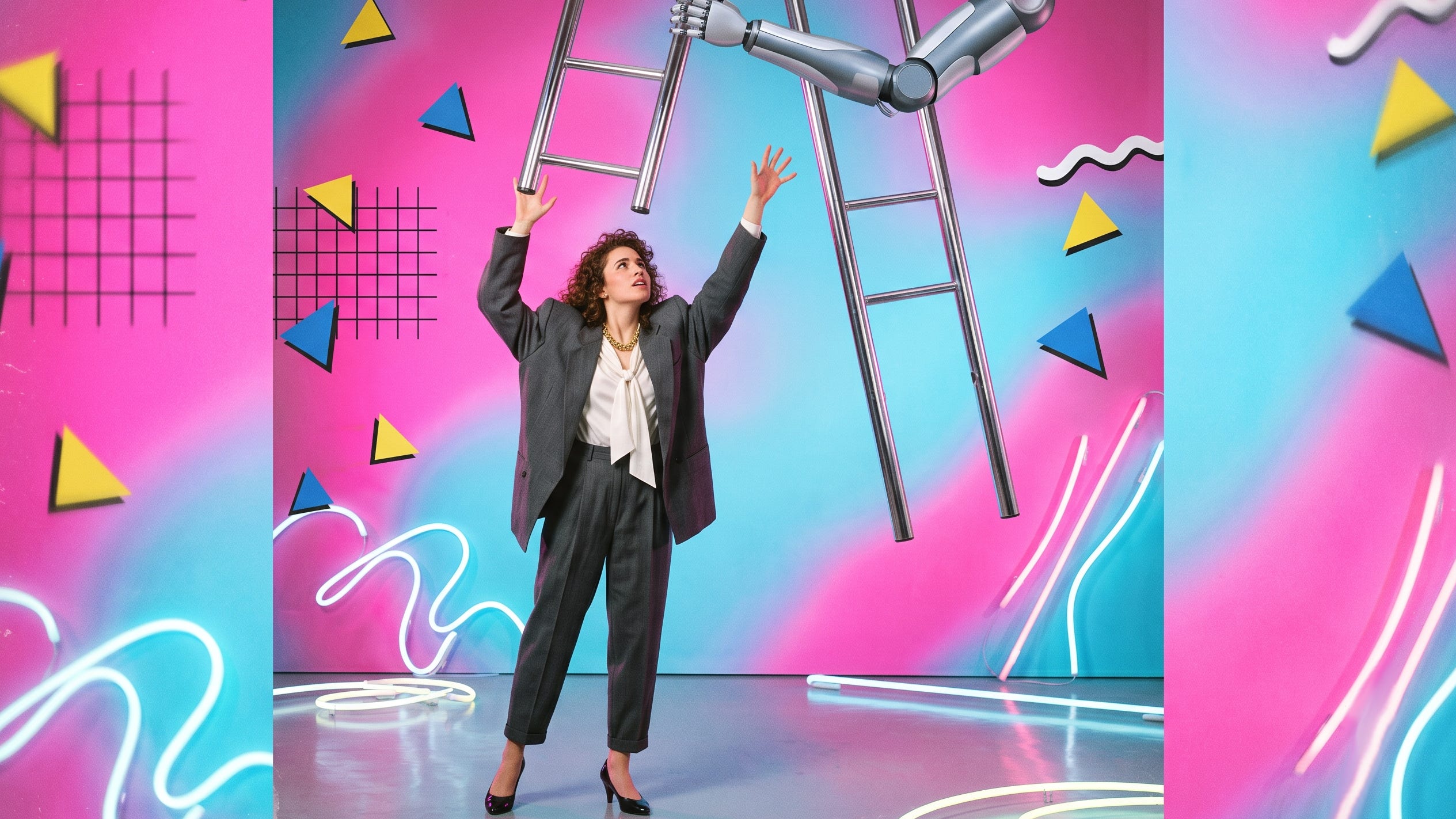
The Ladder is Missing Its Bottom Rung
The ugly part hides inside the good news. Entry-level roles at AI-exposed companies are now seven times more likely to demand “human-intensive” senior skills... judgment, leadership, the stuff you used to spend a decade earning. Those “seniorized” jobs are up 35% since 2019. Entry-level openings are down 10%.
We automated the on-ramp.
The junior work AI can actually do is the same junior work that taught people how to become senior. Kill the first rung and you don’t get a leaner workforce, you get a generation with nowhere to start and a hiring manager demanding they show up pre-seasoned. (Ask the average 24-year-old how that’s going. Then meet me in the Personal section.)
The Second-Half Call
So here’s the forecast for the back half of 2026, and I’ll plant the flag now so you can screenshot it in December.
The replacement era peaks and reverses. The smart money stops asking how many people AI can replace and starts asking how good the people are that they’re pointing it at. Not because anyone got sentimental. Because the augmentation crowd is already winning on the scoreboard, and scoreboards are contagious.
The bets get louder in the meantime. General Intuition just raised $320M at a $2.3B valuation to build AI that learns to act by watching gamers, and TikTok shipped an Agentic Hub so agents can run your ad campaigns end to end. Impressive, even. But every one of those bets still bottoms out at the same unglamorous truth Ford paid full price to relearn.
The model is only as good as what you feed it. And the best thing you can still feed it is a human who knows what they’re doing.
That’s not nostalgia. That’s the whole second half.
THE PERSONAL: Your Brain Is Making This Up

The guy next to me on the flight home from Paris raw-dogged the entire trip.
No movie, no show, no music, no book. Eight hours, screen off, staring at the seatback like it owed him money. I must have looked at him a beat too long, because he offered an explanation I didn’t ask for.
“AI has ruined movies for me.”
Now, that’s… a take. I sat with it. I still am. Because, honestly, we’ve had special effects for the better part of a century. We’ve had CGI armies and de-aged actors and entire fake cities for years, and none of that ruined anything for him. But somewhere in the last eighteen months a switch flipped, and now this dude and his weird mustache would rather stare at gray plastic for a transatlantic haul than risk two hours with something a machine might have touched.
He didn’t skip a movie. He refused to run the experiment.
Summer Reading
Clearly I couldn’t stop thinking about him, because a week later, I’m writing about him. Jetlagged from Cannes, dragging home a cold as a souvenir, brain firing in weird directions, scrambling new ideas into old ones at 3 a.m. like a search engine with a fever.
So I did the only thing the heat would allow once I got back. I sat by the pool, occasionally in it, and read a book about exactly that.
A Trick of the Mind, by Daniel Yon, a cognitive neuroscientist who runs something called the Uncertainty Lab. Its argument is simple and a little unsettling: the world you experience is less a thing you perceive and more a story your brain invents. Your mind is a prediction machine. It builds a model of reality, then spends its energy defending that model, sometimes past the point where the evidence has stopped cooperating.
Which is to say my seatmate and I were reading the same book from opposite ends. His brain built a model, AI ruins everything, and then protected it by refusing to look at anything that might prove it wrong. Mine was doing the messier, better thing, running the experiment, testing the story, letting the cold and the jetlag knock a few stale predictions loose.
This is the Brain Working as Designed
Neither of us is malfunctioning. That’s just what the machine does.
Yon’s point is that the same equipment that produces genius produces delusion. The brain that leaps to a brilliant insight is the same brain that clamps onto a bad theory and won’t let go, and it feels identical from the inside. Certainty is not a signal that you’re right. It’s just the feeling of your model holding together.
That should make all of us a little humbler heading into the back half of this year, because everyone I know in media and tech and marketing is walking around radiating certainty right now. AI changes everything. AI changes nothing. The click is dead. The click is fine. We’re all so sure. And Yon would gently point out that the confidence is coming from the same place the flight guy’s is. It’s a model defending itself.
Why I’m Telling You This…
Because this whole edition is a preview, and a preview is just a prediction wearing a blazer.
Every forecast in here, mine included, is my brain doing the exact thing Yon describes. Building a model of what the second half holds and then making a confident case for it. I’d be a fool to pretend I’m the one person whose predictions come from somewhere cleaner.
So read the rest of this the way I’m trying to write it… Not as a man who’s figured out where 2026 is going, but as one more prediction machine, running the experiment out loud, willing to be wrong.
The flight guy would’ve turned this section off… but I think that’s exactly why it was worth writing.
THE PROFESSIONAL: Nobody Clicks Anymore, and That's the Point
Ok, back to the important stuff. Like Click-through rates!!!
Everyone carries a number in their head for what a “good” organic CTR looks like. Everyone’s number is too high.
Whether from search, AI LLMs… or somewhere else, people are clicking through to websites less and less.
Ahrefs crunched Search Console data across more than 400K websites, and a good whole-site organic CTR lands between 1% and 2%. Not the 10% that lives rent-free in every marketer’s skull. That 10 is position-one, single-keyword vanity math, and it’s been lying to your quarterly deck for years.
And what’s going to hurt most in the back half of 2026: it’s getting worse.
And on purpose.
The Answer is Eating the Click
When Google shows an AI Overview, clicks to the top organic result drop roughly 58%. That’s up from the 34.5% Ahrefs clocked not long ago. The number nearly doubled while you were reading Cannes recaps.
Look at who survives. Adult sites lead every category at 7.53%, more than double the runner-up, for the profoundly unsexy reason that Google almost never bolts an AI Overview onto those queries. Health and pets sit at the bottom, because the Overview answers the question before a human has any reason to click.
So the pattern is locked. Wherever the machine can hand over a finished answer, it does, and the source that fed that answer gets nothing. No click, no traffic, no credit.
That’s a cognitive shift before it’s a marketing one. An AI Overview delivers a pre-built model of reality and deletes any reason to go test it against the source. The summary becomes the belief. Do that a few billion times a day and being right matters less than being the thing the answer was built from.
Citation is the New Currency, and It Has a Catch
If the click is dying, the thing worth chasing is getting cited inside the answer itself.
LinkedIn’s own Davang Shah wrote the tactical playbook for exactly this, and it’s clean, mechanical advice: lead with keywords, frame everything as a question and a tight answer, keep it to 200-300 words, hand the model structure it can lift without effort.
Follow it and yes, you’ll get cited more.
You’ll also sound identical to everyone else who followed it. Here’s the catch nobody wants to print: the format that makes you legible to the machine is the format that makes you forgettable to a person. Every post flattens into the same keyword-front-loaded, Q&A-scaffolded, list-of-three pablum, optimized straight into interchangeability. (I break most of those rules on purpose. You may have noticed. As far as I can tell, being a little unliftable is the last moat anyone has left.)
Meanwhile… The Whole Layer Goes on Sale
While you’re busy adapting, the platforms are busy charging rent. Because that’s what they do best.
Google is testing AI summaries beneath Search ads, so its model now writes copy under the copy you paid for and controlled, complete with a disclaimer that it “can make mistakes.” Comforting. OpenAI is hiring for image, video, and conversational ad formats, which puts ads inside the answer box itself. And Meta is paywalling its best AI at $20 a month.
Ads in search, ads in chat, paywalls on the features. Every surface that used to be free discovery is getting enclosed and metered at the same time.
The Second Half Play
So here’s the flag for H2. Screenshot it for December.
Stop optimizing for the click. It’s a dying metric bolted to a shrinking pipe. Start optimizing to be the source the machine can’t answer without... the primary thing, the quality input, the take too specific to fold into someone else’s Overview.
There’s a counter-bet worth watching, too. Enthusiasm for AI-generated content has cratered to 26% from 60% two years ago, Fizz just raised on a “human, anonymous, OG Facebook” pitch, and LinkedIn’s new collaborative posts turn a verified human co-sign into distribution. The more synthetic the feed gets, the more an actual person is worth.
Machines reward the liftable. Humans, still, reward the ones worth stealing from.
THE POLITICAL: Whose Reality Is It Anyway?

Politics in the back half of 2026 comes down to one fight, and it isn’t left versus right. It’s who gets to write the model everyone else has to live inside.
Yon says your brain builds a story and then defends it. Turns out institutions do the same thing, except their story becomes your ad, your zoning law, your training data, and your kid’s idea of what a real person looks like. The second half is a scramble over authorship. Whose version of reality gets to be the default one.
Three fronts, all moving at once.
The Fox Filed a White Paper
Google published its blueprint for AI regulation, and credit where it’s due, it reads beautifully. A “pragmatic middle way.” Voluntary audits. An industry-backed body to set the safety bar. The kind of document that sounds like adults talking until you clock who’s holding the pen.
The load-bearing word is “adapting,” as in adapting copyright law to handle AI training. That’s the blazer-wearing way of saying the small matter of whether a company gets to hoover up the entire web to train on should be settled on terms convenient to the companies doing the hoovering.
So yeah… let’s just say the obvious thing: The people who made the inputs, every writer, artist, newsroom, and creator whose work is the training data, aren’t at this table.
They’re on the menu.
And the whole second-half AI story turns on whether that changes, because value is migrating to exactly the quality human inputs this framework treats as free feedstock. Whoever gets to define “reasonable” here wins a decade. Right now that’s the party with the most to gain from the definition.
The “Show Your Work” State
Compare that to Albany, of all places. New York’s synthetic performer law is live, and it does the one thing Google’s white paper carefully avoids. It forces disclosure. Use an AI-generated performer in an ad, a lead, a background extra, even a fake hand model, and you say so or you eat a fine.
Almost quaint. A law built on the radical premise that a human should know when the person selling to them isn’t one.
And the instinct is landing, because enthusiasm for AI-generated content has cratered (as mentioned above). The audience’s own model is updating in real time, souring on the synthetic, and the state just codified that gut feeling into paperwork. Google wants to govern AI with a handshake. New York decided to govern it with a receipt. I know which one I trust, and it’s the one carrying a $5,000 penalty.
The Guy With 181 Receipts
Which brings me to my favorite accountability project of the year. Brian Patrick, a former developer with a Harvard law degree, has spent 2026 posting one unhinged AI-executive quote a day, past 181 installments and tens of millions of views, cataloging the Ellison bathroom-camera stuff and the Palantir “100 million fans” of it all.
The delicious part is the method. Patrick checks the people building the machine by using the exact viral, algorithm-native format the machine rewards. He’s fighting the surfaced-winner economy with its own weapon and winning. That isn’t a footnote. As far as I can tell, that’s what accountability looks like now. Not a hearing. Installment 181.
The Thing None of Them Can Model
In the second half, the people being modeled are done holding still. Young men who swung 15 points right in 2024 are already down about 10 on Trump, telling the Times both parties get it wrong, one cruel and one clinical. The apparatus overfit one election into a permanent law and the data walked off. Maybe, as one researcher put it, they’re just swingy and up for grabs.
Every model in this section, Google’s, Albany’s, both parties’, is a confident theory about people who refuse to behave. The governance gets written by whoever moves first. The generation it’s written about hasn’t decided a thing.
And on the week of the country’s 250th birthday, that’s either terrifying or the most hopeful thing I’ve got.
*AI Disclosure: 100% of this was written by me, a human with only light edits and typo corrections from Grammarly. The images are mostly AI-generated using Nano Banana.