
PPPPool Parties and Pure Pressure -- Four Ps 287
Knicks Euphoria, World Cup Pool Party, How We Learn, and Why Pressure Is Failing the Privileged

My personal network has lost its collective mind, and I love it.
The Knicks are in the NBA Finals for the first time in 27 years. The opponents, the San Antonio Spurs, are the same team that beat them the last time, in 1999. I remember that year vividly. All of it. And during my entire tenure at the NBA, and ever since, they haven’t come this close.
So if you’ll allow those of us who’ve waited nearly three decades a moment to be insufferable about it, we’d appreciate it.
I know not everyone reading this is a New Yorker. I know some of you are actively rooting against us out of spite. That’s fair. Just let us have this.
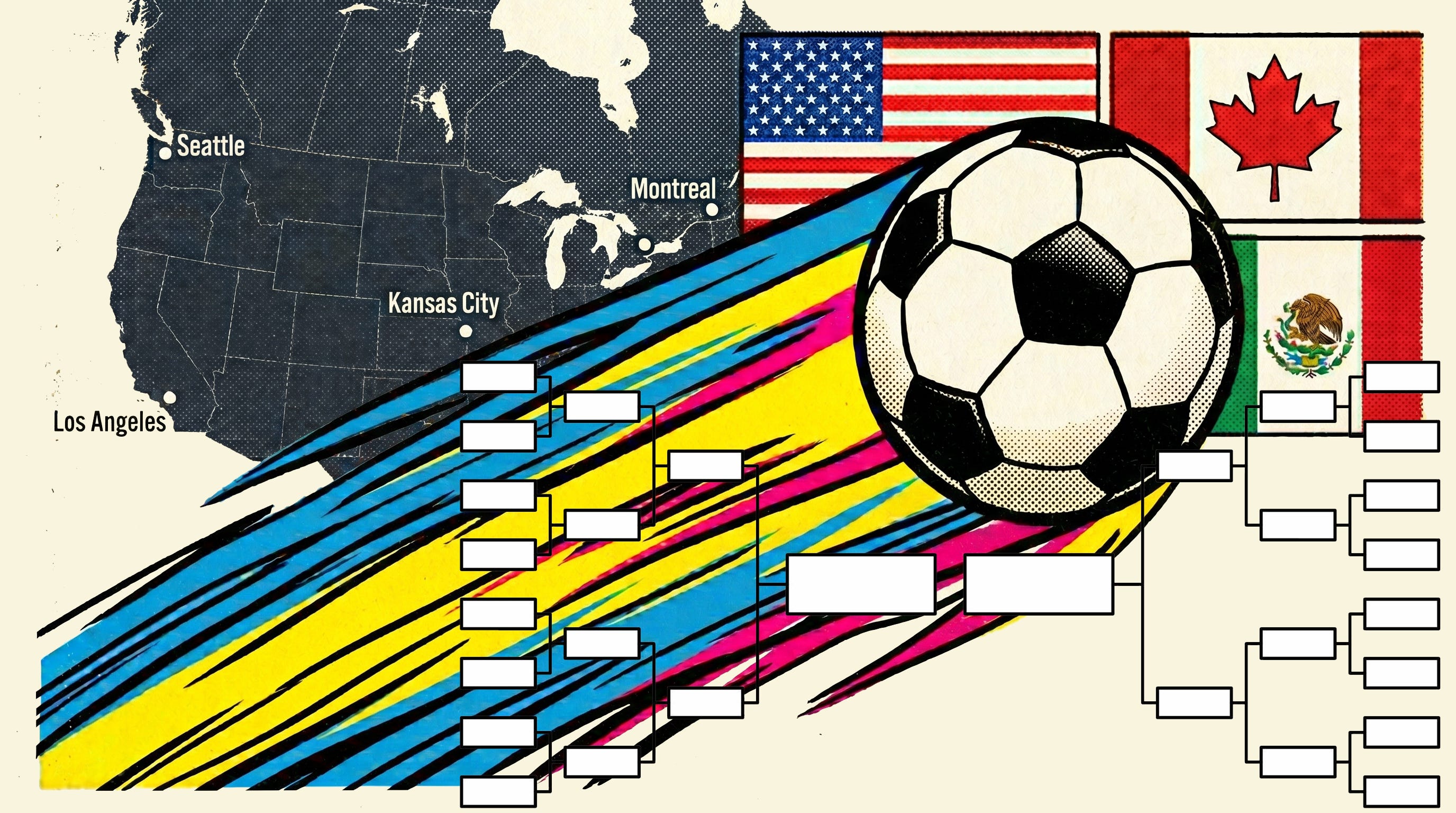
And if a basketball team you don’t care about doesn’t move you, the World Cup kicks off this week, right here in our backyard. 39 days, three countries, the whole thing ending at MetLife (or whatever they legally have to call it) in July.
Based on the pre-tournament polling, your reaction to that news is somewhere around “meh.”
We’ll get to why that is. The short version: it’s struggling for some of the same reasons the Freedom 250 concert face-planted, and there’s a lesson in both.
THE PLAYFUL: Party on the World’s Stage
The World Cup is my favorite sporting event on earth, so consider the rest of this edition an attempt to will you into caring.
Which is also why, for the first time ever, I’m benching Political this round and subbing in “The Playful.” The moment calls for it. Political will be back. The beautiful game only comes around every four years.
Here’s the pitch, and I’m not going to bury it: Join my World Cup pool!
That’s it. That’s the ask. Five weeks of sustained rooting interest, a leaderboard to obsess over, and a reason to care about Curaçao vs. Germany at 2pm on a Tuesday. The tournament is going to take over North America whether you opt in or not. You might as well have skin in it.
Now let me sell you on the thing the pool is attached to.
The World Cup has a sentiment problem. Pre-tournament polling has been lukewarm. Big, top-down, institutionally hyped event, and the public shrugged. You can’t manufacture excitement at people. They show up for the thing, not the announcement of the thing.
But the audience is there if you know where to look. A new survey found at least 81% of Gen Zers across the UK, France, Germany, and Spain plan to follow the tournament. The interest isn’t dead. It’s just not where the institutions keep aiming.
The brands have noticed. And they’ve mostly placed one enormous bet.
Messi.
He’s starring in 18 of 80 World Cup ads tracked across the US, UK, and Argentina, per System1. Nearly 25%! Lowe’s built its entire campaign around 10-foot inflatable Messis. One man, in his last World Cup, has become the closest thing global advertising has to a sure thing.
Which raises the question nobody at those agencies wants to sit with:
Is this the last gasp of linear TV advertising for an event like this? I’ve already seen every one of these spots online. So, probably.
There’s a real insight buried in the fan data. People remember two things about a match: the goals, and what they were eating when the goals went in.
Food and snacks (38%) and alcohol (33%) dominate ad recall.
Auto (27%) and finance (21%) hang on, mostly on the strength of decades of sponsorship muscle.
Telecom, personal care, and fashion (16% each) vanish into the digital pitch.
Fans watch in a high-emotion, low-attention state. The brands that win are the ones already woven into the ritual: what you eat, drink, wear, drive. Everything else is expensive background noise.
So if you’re a brand and you’re not a natural match-day staple, the move isn’t to force a generic sports spot. It’s to attach to the feeling. The subcultures, the lifestyle, the gut-punch highs and lows. That’s where the tournament actually lives.
One last thing the marketers got wrong. Creators are largely sitting this one out. The biggest live event on the planet, and there’s a creator gap. Which tells you the official machine is still building for a broadcast audience while the actual energy moved somewhere else years ago.
Same lesson as the Professional section, honestly. You can’t coerce enthusiasm. You earn it by meeting people in the ritual they already have.
So meet me in mine.
The pool’s right here. Don’t make me beg.
THE PROFESSIONAL: Remember When They Said AI Couldn’t Replace You?
Yeah, that aged well.
Sam Altman just walked it back. Again. In a recent interview the OpenAI CEO said an AI jobs apocalypse is unlikely and that he’d been “pretty wrong” about the near-term hit to the labor market. The timing is not subtle. OpenAI is reportedly prepping a Q4 2026 IPO at a roughly $1 trillion valuation, and “the thing we sell will gut your livelihood” is a hard line to put in an S-1. More here on the full reversal.
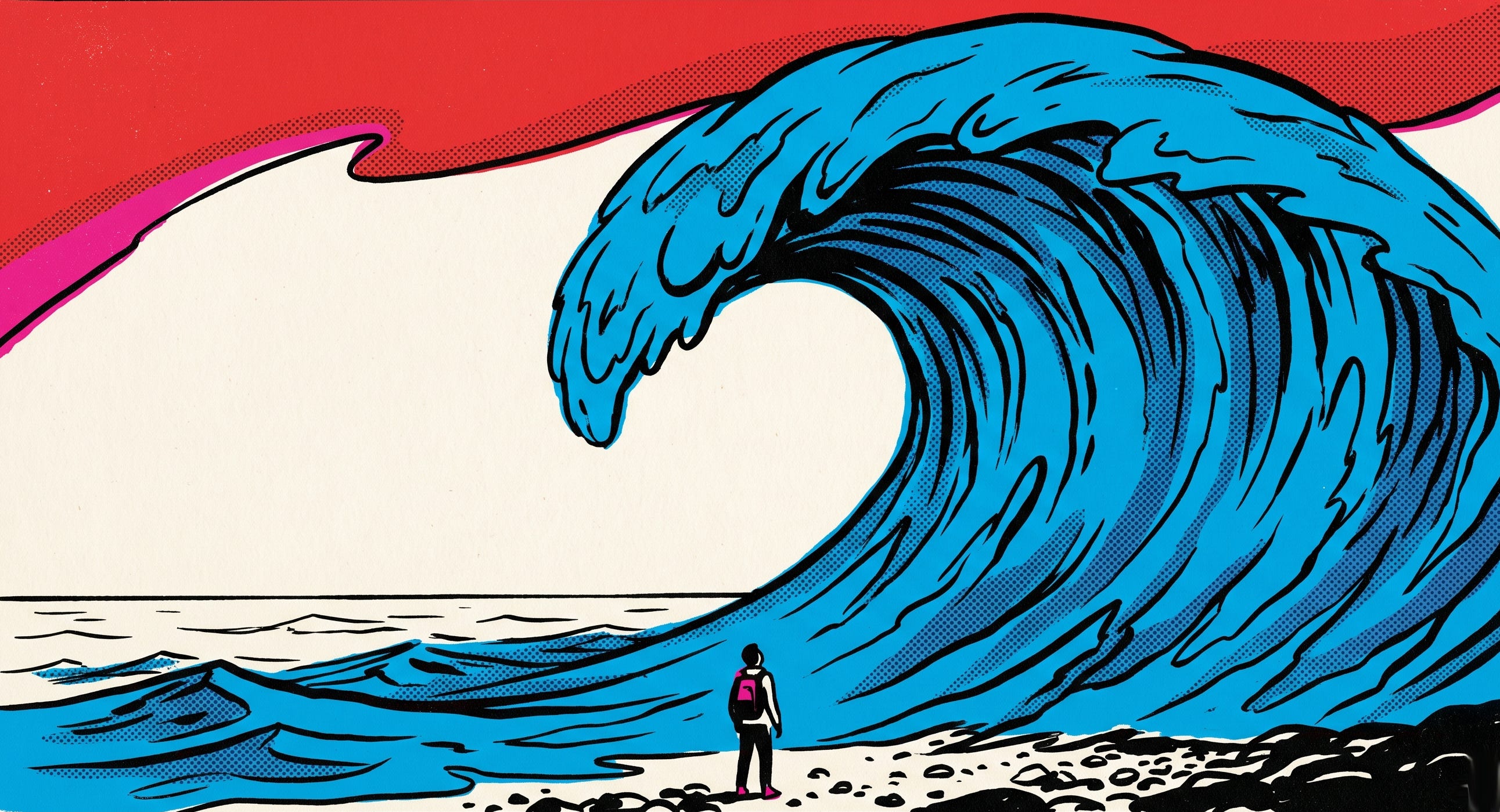
Meanwhile the foundation arm just committed $250 million to help the economy absorb the disruption the product is causing. Front-running your own crisis is a fascinating business model. Build the wave, fund the lifeguards, IPO the beach.
I’m not even mad. It’s smart. It’s just worth naming out loud.
Because here’s what’s actually happening on the ground, and it’s uglier than the press releases.
Workers are lying about AI.
A new GCheck study of 1,500 employees found 63% exaggerate their AI skills to look current. Among Gen Z it’s 80%. Forty percent talk confidently about AI in meetings to avoid looking behind. A quarter have taken full credit for work AI did. Sixteen percent flat-out lied about what they can do.
And then the twist.
That same workforce is undermining AI on purpose. Eighty-one percent admitted they discourage or limit its use at work. They’ll perform fluency in the meeting and refuse the tool at the desk. GCheck’s CEO called it “double distortion.” I’d call it self-defense.
Here’s the line that should be stapled to every leadership offsite: more than half the people faking their AI skills never received any training. That’s not a technology problem. It’s a learning-culture problem wearing a technology costume.
Which brings us to the part nobody wants to own.
You cannot coerce a transformation.
People don’t adopt things they’re being threatened with. And the threat is real, not imagined. ClickUp cut 22% of its staff citing a “radical embrace of AI.” Groupon dropped a quarter of its workforce to go “AI-native.” The class of 2026 is now likelier to be unemployed than the average American, and the most AI-exposed majors got hit hardest. The Economist’s chart said it better than I can: forget Python, study Plato.
So of course people are scared. Of course they’re hedging. When the same companies preaching curiosity are signing the layoff memos, you don’t get curiosity. You get resentment with a smile on top.
And resentment scales.
A WIRED report found DHS and the FBI are now tracking anti-technology extremism, with intelligence bureaus warning of civil unrest tied to AI job loss and data-center construction. 70% of Americans oppose data centers in their region. Among 14-to-29-year-olds, AI excitement has dropped 14 points, and many say they don’t want to use it but feel they have to.
That’s the whole problem in one sentence. They feel they have to.
So here’s the part I actually believe.
The companies that win the next few years won’t be the ones that deployed the most agents. They’ll be the ones whose people felt safe enough to say “I don’t know how to use this yet.” That sentence is worth more than any model. And right now almost nobody feels safe enough to say it.
Fix that first. The tools can wait.
Ultimately, this is a period of required, rapid learning. Open-mindedness is not optional. Neither is skepticism. Trust, but verify, on every output, every vendor, every promise.
THE PRACTICAL: How People Actually Learn
But you learn faster when you’re not afraid.
Which raises the obvious question almost nobody in this AI scramble is asking:
How do people actually learn?
I can’t remember where I first picked this up... maybe a leadership offsite, a management training, some workshop with bad coffee and a flip chart. But it stuck. Understanding how people process information might be the most basic skill in professional life, and somehow the most ignored. We’re getting bombarded from every direction, internal and external, and the whole game is sorting what matters, prioritizing it, and acting before the next wave hits.
So before you roll out another tool nobody asked for, maybe learn how learning works.
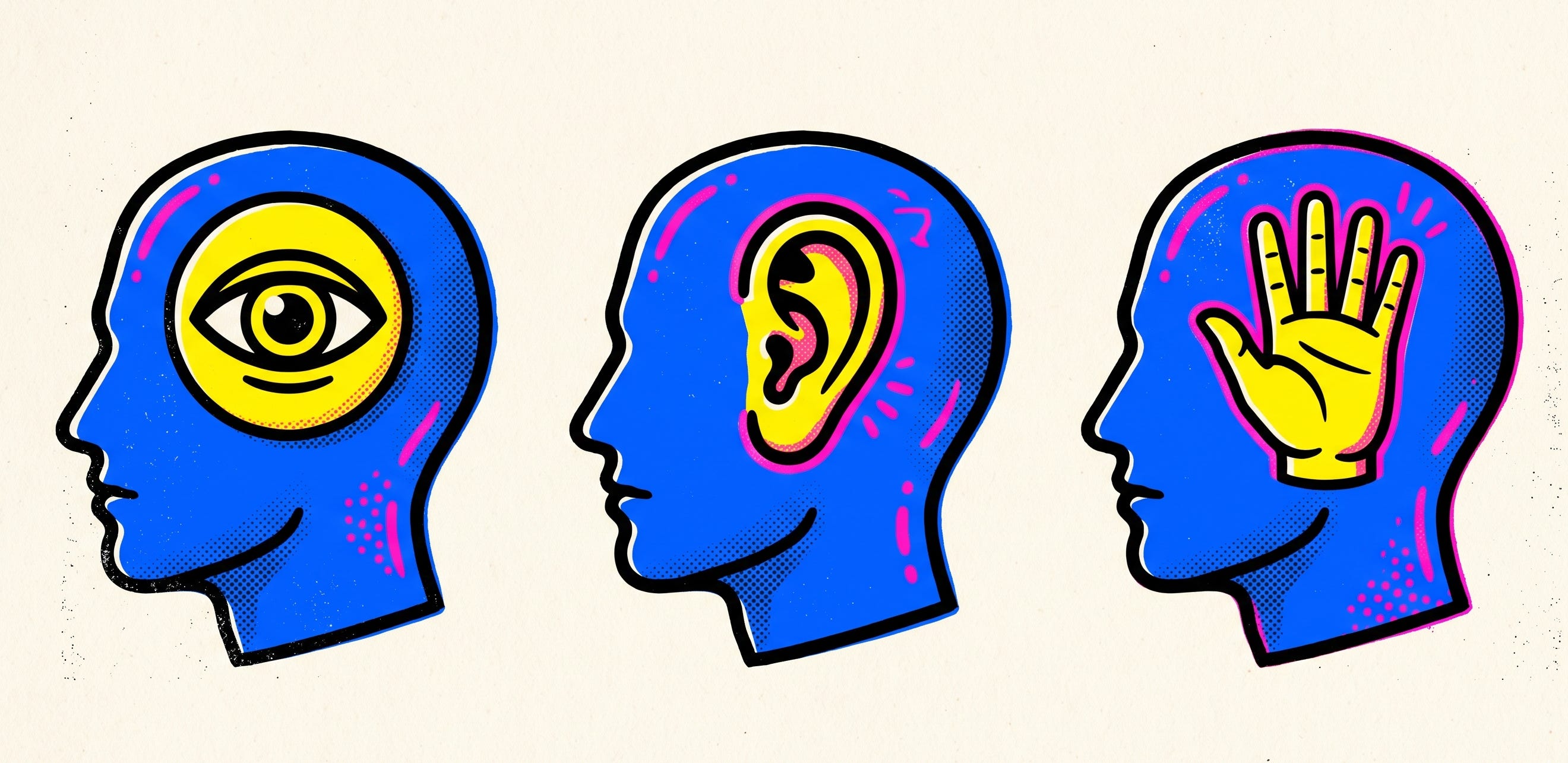
The simplest frame is the VAK model. Visual, Auditory, Kinesthetic. It’s not gospel, and learning scientists love to poke holes in it, but as a quick gut-check on why your training deck isn’t landing, it’s useful.
Visual learners -- absorb best through seeing. Diagrams, charts, written notes, color-coding. They’re the ones building the mind map while you talk. If your AI rollout is a 40-minute monologue with no screen share, you’ve already lost them.
Auditory learners -- take it in through hearing and talking it out. Lectures, discussions, podcasts, reading aloud. They learn in the conversation, not the doc. Put them in a room to argue about the new tool and they’ll retain more than any tutorial ever gave them.
Kinesthetic learners -- need hands on it. They learn by doing, breaking, rebuilding. Sitting still through your enablement webinar is actual torture for them. Hand them the thing, let them poke at it, accept that they’ll learn by snapping it in half first.
Every company racing to deploy AI is, knowingly or not, running a giant learning program. And almost all of them are running it in one mode. A mandatory video. A slide deck. A Slack post that says “the future is here, please adopt by Friday.”
That’s a visual-auditory drive-by aimed at a workforce that learns three different ways and trusts you none of them.
The fix isn’t complicated. It’s just unglamorous.
Show people. Talk it through with them. Let them get their hands dirty and fail safely.
We spend millions on the tools and roughly nothing on teaching people how to hold them. Then we act surprised when the adoption numbers come back limp.
You don’t have a technology problem.
You have a teaching problem.
THE PERSONAL: A Summer Job, If You Can Find One
I keep thinking about something I read this week.
There are sleepaway camps now charging more than $8,000 a month that are quietly rebranding as career accelerators. At Camps Baco and Che-Na-Wah, where several of my friends both went and sent their kids. counselors hop on Zoom calls with career consultants for résumé prep. They leave mid-session to finish virtual internships.
One recruiter built a whole business line teaching 15-year-olds how to interview and work their camp network. “We look at it through the lens of career management,” she says.
About a kid. At sleepaway camp.
You can almost forgive the panic. The WSJ says we’re tracking toward the worst summer for teen employment since the government started counting in 1948. Counselor listings are down nearly 30%. New York’s youth program drew 200,000 applicants for 100,000 slots. An ice cream shop on Cape Cod got hundreds of applications back in January for fifty jobs.
The first job. The rite of passage. The thing that taught you to show up, clock in, and survive a bad manager. It’s evaporating, and the kids feel it.
What’s worse... the teenagers aren’t even outside to notice.
One writer went looking for them and found Central Park empty, kids averaging about nine hours a day on screens. She calls it “teen colony collapse,” New York kids dressing and talking like teenagers everywhere else, the slang reading less like a renaissance than the byproduct of algorithmic brain rot.
I don’t fully agree with her. But I’ll read Nancy Jo on the youth beat every time.
And it’s worse than empty parks.
There’s a new kind of bullying where kids photograph each other eating and post it. The ugly mouthful. The lonely eater. One high school senior in San Diego has been the subject of unflattering lunch photos thirty or forty times. He now scouts hidden corners of campus to eat in peace. When one Washington district banned phones all day, the number of kids eating lunch went up. They were finally eating because nobody could photograph them doing it.
You couldn’t pay me a million dollars to go back to middle school. Unfortunately, I have one kid who is finishing her first year in middle school, and another who just finished his first in high school.
We took the years that were supposed to be slack. The messy, unprofitable, formative ones. And we turned them into a pre-professional internship with worse lighting and a camera pointed at every sandwich.
The money doesn’t fix it. The $8K camp can’t buy a kid out of the anxiety. It just professionalizes it earlier.
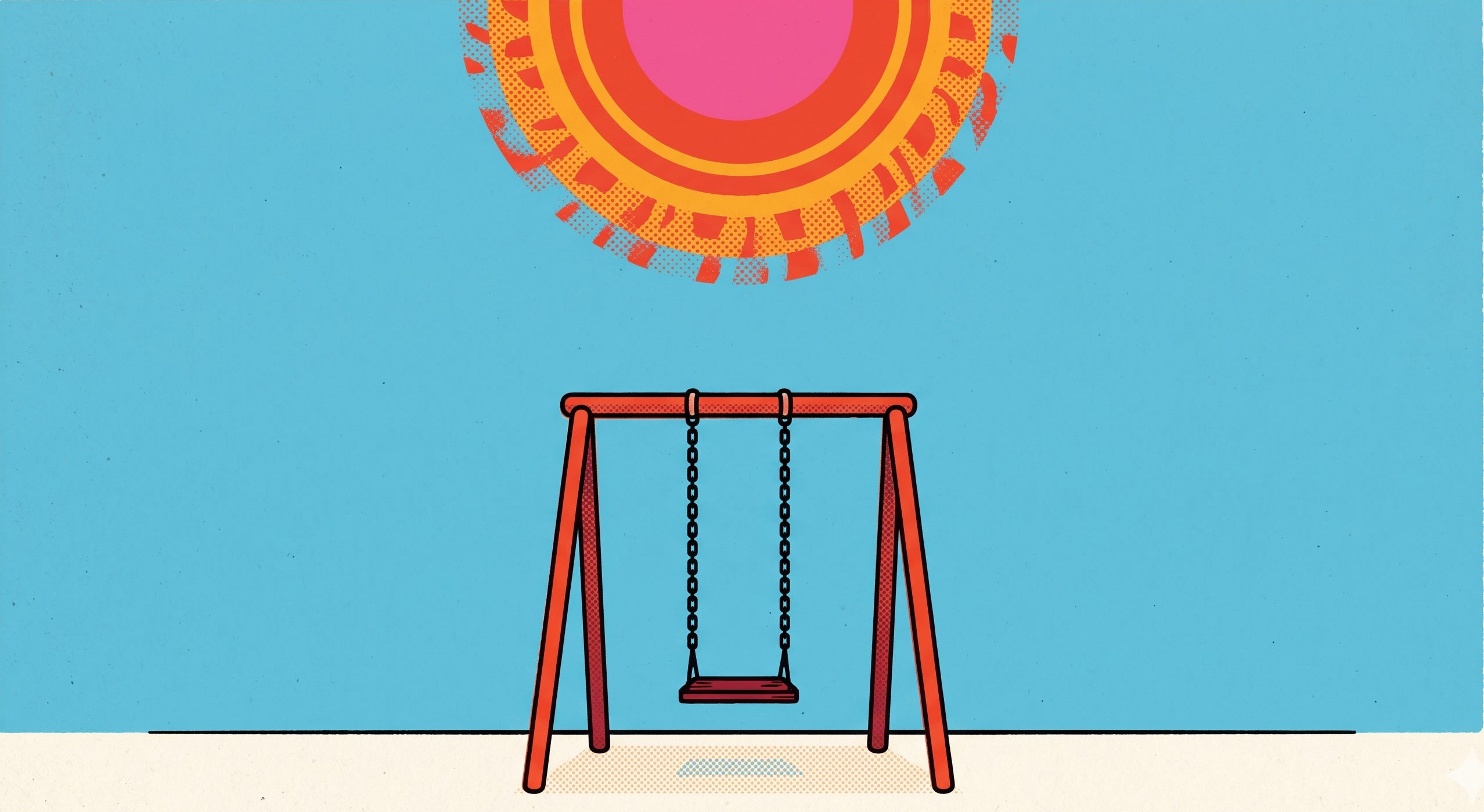
Kids don’t need a LinkedIn at fifteen… They need a summer.
The unstructured, slightly boring, gloriously unmonitored kind. The kind where the worst thing that happens to you is sunburn and a crush who doesn’t text back.
That one’s not coming back on its own. But we could at least stop selling them the alternative.
*AI Disclosure: 100% of this was written by me, a human with only light edits and typo corrections from Grammarly. The images are mostly AI-generated using Nano Banana.